 FREE DELIVERY ON ORDERS $100+ | PLEASE NOTE: PAYMENT EMAIL UPDATED |






Cannabis Education
What Is THC? Effects, Benefits, Risks & Beginner Guide in Canada (2026)

May
If you’ve ever explored cannabis products or browsed a dispensary menu, you’ve likely come across THC. It’s one of the most talked-about compounds in cannabis—but also one of the most misunderstood.
So what exactly is THC? How does it affect your body? And how do you use it safely, especially if you’re new to cannabis?
In this complete guide, you’ll learn:
- What THC is and how it works
- The effects (both positive and negative)
- THC vs CBD explained simply
- Safe dosage guidelines for beginners
- Different THC product types in Canada
- Legal considerations and safety tips
Whether you’re curious, cautious, or ready to try cannabis, this guide will help you make informed decisions.
What Is THC?
THC (short for tetrahydrocannabinol) is the primary psychoactive compound found in cannabis. It’s responsible for the “high” people experience when consuming marijuana.
But THC isn’t just about intoxication—it interacts with your body in complex ways that influence mood, memory, appetite, and perception.
THC Meaning Explained
THC belongs to a group of compounds called cannabinoids, which interact with your body’s endocannabinoid system (ECS).
The ECS helps regulate:
- Mood
- Sleep
- Appetite
- Pain
- Memory
THC binds mainly to CB1 receptors in the brain, which is why its effects are primarily mental rather than physical.
How THC Works in Your Body
THC mimics natural chemicals your body already produces (called endocannabinoids). Because of this, it can “fit” into receptors in your brain like a key in a lock.
Once THC binds to these receptors, it influences neurotransmitters—especially dopamine, which is linked to pleasure and reward.
What happens after consumption?
- Brain activity changes (altered perception)
- Dopamine levels increase (euphoria)
- Sensory awareness heightens
- Reaction time may slow
Why Different Methods Feel Different
The way you consume THC dramatically affects how it feels:
| Method | Onset Time | Duration |
| Smoking/Vaping | 2–5 minutes | 2–4 hours |
| Edibles (capsules, syrup) | 30–90 minutes | 6–8 hours |
| Oils (sublingual) | 15–45 minutes | 4–6 hours |
👉 This is why beginners often prefer low-dose edibles or oils for better control.
THC Effects: What to Expect
THC affects everyone differently depending on dose, tolerance, and environment.
Common Positive Effects
- Euphoria and happiness
- Relaxation and stress relief
- Enhanced sensory perception
- Increased appetite (“the munchies”)
- Creativity or altered thinking
Possible Side Effects
- Dry mouth and dry eyes
- Anxiety or paranoia (especially at high doses)
- Impaired memory or focus
- Drowsiness
- Increased heart rate
👉 Most negative effects are dose-dependent, meaning they’re more likely at higher THC levels.
THC Dosage Guide (Beginner to Advanced)
One of the biggest mistakes new users make is taking too much too quickly.
Recommended THC Dosage
| Experience Level | Dose |
| Beginner | 2.5 – 5 mg |
| Intermediate | 5 – 10 mg |
| Advanced | 10 – 20+ mg |
Key Rule:
👉 Start low and go slow
- Wait at least 2 hours before taking more (especially with edibles)
- Increase gradually over time
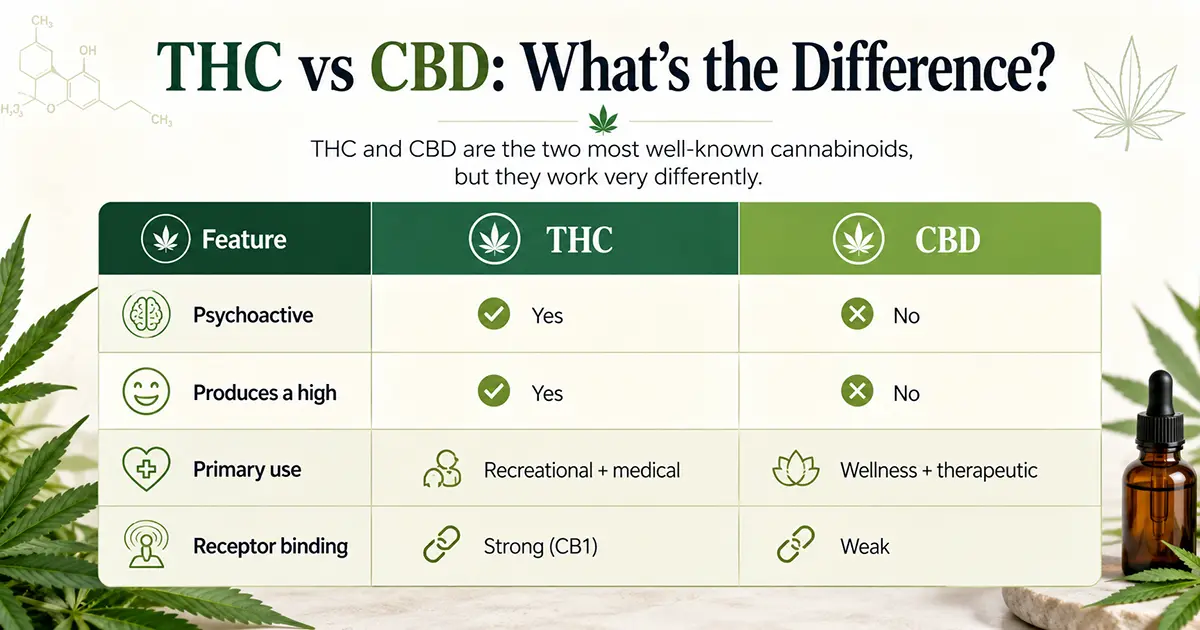
THC vs CBD: What’s the Difference?
THC and CBD are the two most well-known cannabinoids, but they work very differently.
| Feature | THC | CBD |
| Psychoactive | Yes | No |
| Produces a high | Yes | No |
| Primary use | Recreational + medical | Wellness + therapeutic |
| Receptor binding | Strong (CB1) | Weak |
Simple takeaway:
- THC = mind-altering
- CBD = non-intoxicating
Many products combine both for a balanced effect.
Types of THC Products in Canada
Canada’s legal cannabis market offers a wide range of THC products, each with different effects and experiences.
1. THC Oil
THC oil is one of the most versatile and beginner-friendly options.
Benefits:
- Easy to measure doses
- Can be taken under the tongue
- Longer-lasting effects
👉 Ideal for users who want control and consistency.
2. THC Capsules
Capsules offer a familiar, no-fuss way to consume THC.
Why choose capsules?
- Precise dosing
- No taste or smell
- Discreet and convenient
These are especially popular among medical users.
3. THC Edibles (Including Syrup & Drinks)
Edibles include:
- Gummies
- Chocolates
- THC syrup or beverages
Features:
- Longer-lasting effects
- Slower onset
- Easy to consume
👉 Best for users who want a smoke-free experience.
4. THC Flower (Cannabis Bud)
Traditional dried cannabis remains popular.
Pros:
- Fast-acting
- Widely available
- Variety of strains
5. THC Concentrates (e.g., Diamonds)
Highly potent products like THC diamonds contain very high THC levels (often 90%+).
👉 These are not recommended for beginners due to intensity.
Indica vs Sativa vs Hybrid
Cannabis strains are often grouped into three categories:
Indica
- Relaxing and sedative
- Best for evening use
- May help with sleep
Sativa
- Energising and uplifting
- Better for daytime use
Hybrid
- Balanced effects
- Combines both
Popular high-THC indica strains in Canada include:
- Pink Kush
- Death Bubba
- Bubba Kush
Is THC Safe?
THC is generally safe for most adults when used responsibly, but it’s not risk-free.
Who should be cautious?
- First-time users
- Individuals prone to anxiety
- People with certain mental health conditions
- Those mixing with alcohol or medications
Potential Risks
- Overconsumption (especially edibles)
- Impaired coordination (don’t drive)
- Temporary anxiety or paranoia
👉 Responsible use significantly reduces these risks.
THC Withdrawal: What Happens?
While THC is not considered highly addictive, regular users may experience mild withdrawal symptoms.
Common symptoms:
- Irritability
- Sleep issues
- Reduced appetite
- Mood changes
These typically last 1–2 weeks and are manageable.
THC in Canada: Legal Overview
Cannabis is legal across Canada, but regulations still apply.
Key Rules:
- Legal age: 19+ (18 in some provinces)
- Edibles limited to 10 mg THC per package
- Must purchase from licensed retailers
👉 Always choose regulated, lab-tested products for safety.

How to Choose the Right THC Product
Selecting the right product depends on your goals and experience.
Consider Your Experience Level
- Beginner → Low-dose edibles, capsules
- Intermediate → Oils, balanced strains
- Advanced → High-THC flower or concentrates
Consider Your Desired Effects
- Relaxation → Indica
- Energy → Sativa
- Balanced → Hybrid
Consider Consumption Method
- Fast onset → Smoking or vaping
- Long-lasting → Edibles
- Controlled dosing → Oils or capsules
Tips for Safe THC Use
To get the best experience:
- Start with a low dose
- Avoid mixing with alcohol
- Stay hydrated
- Use in a comfortable environment
- Give effects time before re-dosing
Buying THC Products Online in Canada
Buying cannabis online has become increasingly popular due to convenience and variety.
A trusted Canadian cannabis platform like Weed Delivery Vancouver offers access to a wide selection of THC products, including oils, capsules, edibles, and premium flower.
Benefits of Ordering Online
Convenience
No need to visit a physical dispensary—products are delivered directly to your door.
Wider Selection
Access a broader range of products, including:
Quality Assurance
Licensed providers ensure products are:
- Lab-tested
- Clearly labelled
- Compliant with Canadian regulations
How Long Does THC Stay in Your System?
THC can remain in your body long after effects wear off.
Detection windows:
- Urine: up to 30 days (heavy users)
- Blood: 1–7 days
- Saliva: 24–72 hours
👉 This varies based on frequency of use, metabolism, and body fat.
Final Thoughts: Understanding THC
THC is more than just the compound responsible for a cannabis high—it’s a powerful cannabinoid with a wide range of effects, uses, and product forms.
From beginner-friendly options like capsules and oils to more potent concentrates, there’s something for every type of user in Canada’s legal market.
By understanding:
- How THC works
- How much to take
- Which products to choose
—you can enjoy a safer, more controlled experience.
Ready to Explore THC?
If you’re looking to explore high-quality cannabis products in Canada, platforms like Weed Delivery Vancouver make it easy to find reliable, lab-tested options suited to your experience level.
Take your time, start with a low dose, and choose products that match your goals—your ideal cannabis experience starts with informed decisions.
References:
Ng, T., Gupta, V. (2023, November 12). Tetrahydrocannabinol (THC). National Library of Medicine, National Center for Biotechnology Information. Available at: https://www.ncbi.nlm.nih.gov/books/NBK563174/
Pietrangelo, A., Medically reviewed by Chen J., MD, MBA (2023, May 24). The Effects of Cannabis on Your Body. Available at: https://www.healthline.com/health/effects-of-cannabis-on-body
Luzardo, H., Twu, A., Medically Reviewed by Sheikh, Z., MD. (2025, March 10). How Can I Get Weed Out of My System?. Available at: https://www.webmd.com/mental-health/addiction/what-to-know-about-how-long-marijuana-stays-in-your-system
Department of Justice. (2021, July 7). Cannabis Legalization and Regulation. Available at: https://www.justice.gc.ca/eng/cj-jp/cannabis/